
Winna Account Guide
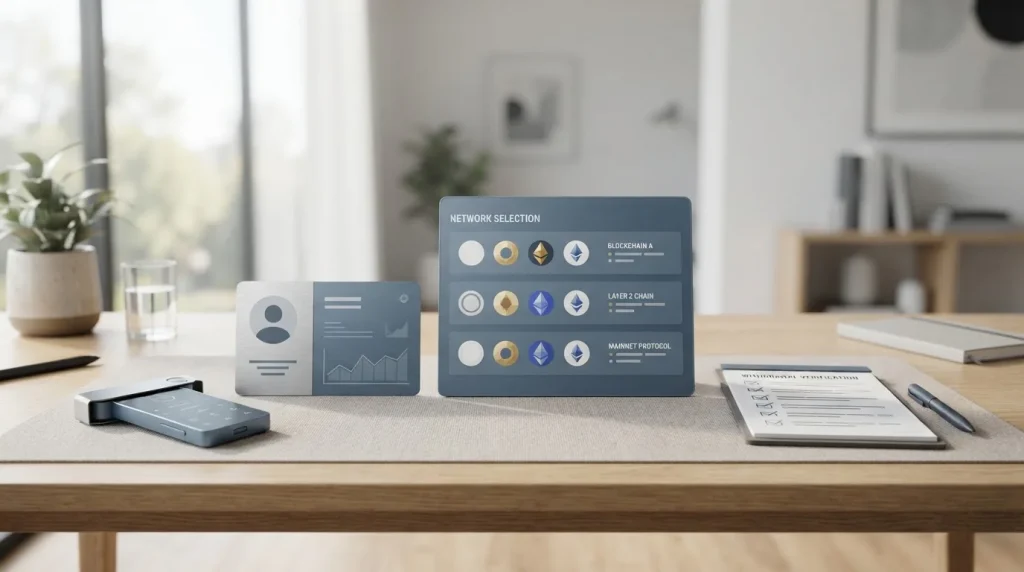
Table of Contents
- Account creation starts with access, not a full document review
- Verification is staged rather than removed
- Crypto funding depends on matching the asset to the network
- A smooth cash-out starts before the withdrawal request
- No upfront KYC is not the same as guaranteed anonymity
- Questions readers usually have about Winna accounts
- The account flow is light at entry but conditional at cash-out
Section element
Registration and verification
Winna uses a crypto-first onboarding flow that can start without mandatory identity checks. That makes initial access lighter than a full-document signup, but it does not remove verification from the account lifecycle: the site’s terms reserve risk-based checks for withdrawals and compliance reviews.
Section element
- Upfront verificationNot mandatory as the standard start
- Later checksRisk-based at withdrawal or review
- FundingCrypto with network selection
- Supported core networksERC-20, TRC-20, BEP-20, Solana
The useful distinction is timing. Registration can begin without a full identity-document step, while later account events can still trigger verification. Treat those as two stages of the same account process rather than as contradictory policies.
Account creation starts with access, not a full document review
Winna describes a crypto onboarding path where users can deposit and play without mandatory verification at the start. For someone used to traditional gambling sites that ask for identity documents before any meaningful account use, that changes the sequence: access comes first, while deeper checks can come later.
The practical consequence is speed at the front of the journey, not a promise about every later step. You can think of registration as establishing the account and preparing a funding route. The payment stage then adds another choice: which asset and which blockchain network you intend to use. The Winna payments guide covers those combinations in more detail.
- Create or access the account through the normal registration flow.
- Choose the cryptocurrency you intend to use.
- Select the matching network shown for that asset in the cashier.
- Check the destination details before sending because blockchain transfers are generally irreversible.
- Keep account information consistent so a later review does not begin with avoidable discrepancies.
Verification is staged rather than removed
Winna’s terms reserve the right to request verification during withdrawal or compliance review. That is the key qualifier behind the site’s no-upfront-KYC positioning. An account can begin without an identity check and still face one later when a transaction or account event requires closer review.
Risk-based verification is common as a process concept: checks are triggered by circumstances rather than imposed identically on every user at signup. Winna does not publish fixed trigger thresholds, so there is no universal amount, timing rule or document list to rely on.
What the current account model supports
- Registration and play can start without mandatory upfront identity verification.
- Crypto can be used as the account funding method.
- Network choice is part of the deposit workflow.
What can still interrupt the flow
- A withdrawal can be held for a risk-based verification review.
- A compliance check can require additional account information.
- Starting without KYC does not guarantee every future transaction will stay document-free.
If your main concern is what happens once you request a payout, the separate withdrawal guide explains timing, limits and the role of review stages in the cash-out sequence.
Crypto funding depends on matching the asset to the network
Winna supports a broad crypto set including BTC, ETH, USDT, USDC, LTC, SOL, BNB, TRX, DOGE, XRP, TON and DAI. It also supports multiple chains, including ERC-20, TRC-20, BEP-20 and Solana for relevant assets. That flexibility is useful, but it creates one account-management task that matters before you send anything: the asset and network must match the destination shown in the cashier.
| Account task | What to check | Why it matters |
|---|---|---|
| Choose asset | The exact coin or stablecoin selected in the cashier | A wallet can hold several assets that are not interchangeable |
| Choose network | The chain attached to that asset | The same token can exist on more than one network |
| Copy destination | The address shown for the selected asset/network pair | Blockchain transfers are usually irreversible |
| Prepare withdrawal | The active coin, network and current cashier limits | Minimums and fees can depend on the asset and chain |
Stablecoins make the network issue especially visible. USDT is supported across ERC-20, Solana, BEP-20 and TRC-20, while USDC is supported across ERC-20, Solana and BEP-20. A familiar ticker does not tell you which chain you are using; the network label does.
- Asset
- The cryptocurrency being sent, such as USDT or USDC.
- Network
- The blockchain rail carrying that asset, such as TRC-20 or ERC-20.
- Destination
- The cashier address created for the selected combination.
- Finality
- Once a blockchain transfer settles, reversal is generally not available in the way a card chargeback might be.
A smooth cash-out starts before the withdrawal request
The account stage and payment stage meet at withdrawal. Winna’s ordinary deposit turnover is 1× before cash-out, while withdrawals are also subject to coin-dependent minimums and a reported $10,000 per 24-hour cap. Separate from those transaction rules, a risk-based verification review can add another step.
This is why it helps to prepare the account before pressing withdraw rather than reacting after a review starts. A simple pre-cash-out check can reduce self-created friction even though it cannot guarantee approval or timing.
- Confirm that the deposit turnover requirement has been met.
- Check the current withdrawal minimum for the specific coin in the cashier.
- Make sure the requested amount fits within the reported daily cap.
- Recheck the destination asset and network before submitting.
- Be ready for a verification request if the account enters review.
No upfront KYC is not the same as guaranteed anonymity
The phrase “no KYC” is easy to overread. In Winna’s case, the supported description is narrower: mandatory verification is not part of the standard upfront registration path, while later checks can still be requested. That is a meaningful convenience difference, but it does not amount to a promise of permanent anonymity.
A crypto deposit can reduce reliance on card or bank payment rails, yet the account itself still sits inside a casino compliance process. If verification is requested, the relevant question becomes whether the account holder can satisfy that review, not whether the original deposit used cryptocurrency.
Entry friction
Lower at the start because mandatory document verification is not described as a standard precondition for registration and play.
Cash-out friction
Potentially higher if a withdrawal triggers a risk-based review and additional information is requested.
Privacy expectation
Crypto funding and no upfront KYC should be read as process features, not as a guarantee that identity will never be requested.
That distinction is especially useful when comparing account convenience with the rest of the site. The main Winna review brings account access together with payments, games, bonuses and public feedback without turning any one feature into a blanket safety claim.
Questions readers usually have about Winna accounts
Does Winna require KYC at registration?
Winna does not describe mandatory identity verification as a standard requirement before registration or play. Its terms reserve the right to request verification during withdrawal or compliance review.
Can Winna request documents later?
Yes. Risk-based verification can be requested at withdrawal or during a compliance review, so an account that starts without upfront checks is not guaranteed to remain verification-free.
Does no upfront KYC mean anonymous withdrawals?
No. Starting without mandatory upfront verification is different from guaranteed anonymous cash-out. Verification can still be requested before or during withdrawal review.
Why does network selection matter when funding a Winna account?
Winna supports multiple cryptocurrencies and several networks, including ERC-20, TRC-20, BEP-20 and Solana for supported assets. Sending an asset over the wrong network can make a blockchain transfer difficult or impossible to recover.
The account flow is light at entry but conditional at cash-out
Winna’s account setup reduces initial friction by allowing registration and play without mandatory upfront KYC. The trade-off is that verification has not disappeared; it can move later in the journey and surface during withdrawal or compliance review. The most practical approach is to treat onboarding, network choice and cash-out preparation as one continuous account process rather than three unrelated steps.